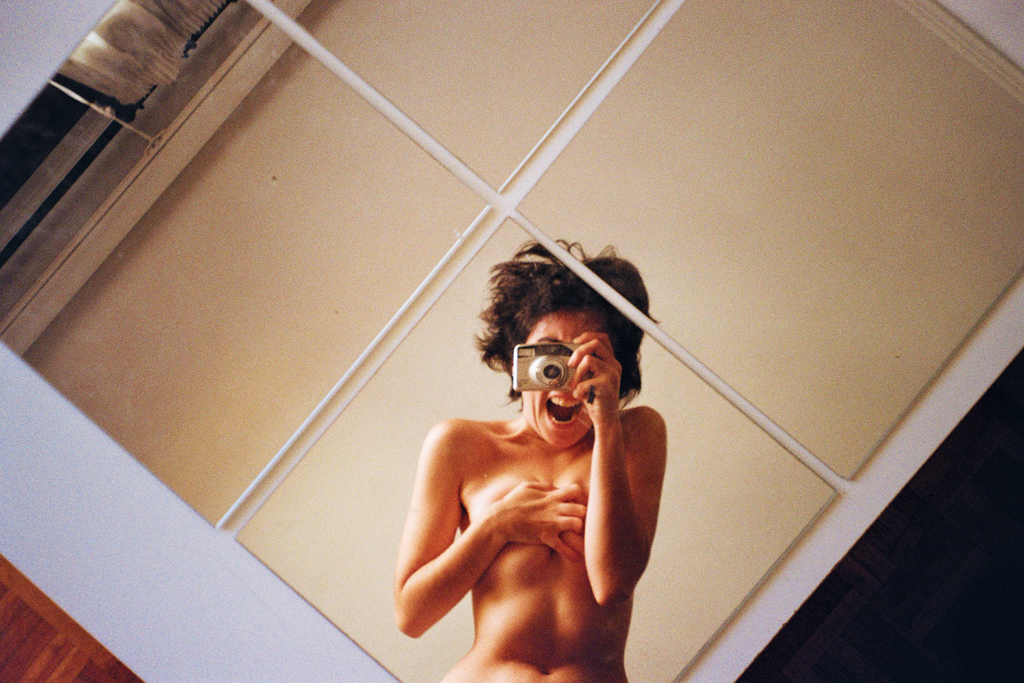
Voice
I haven’t always felt that I could have a “voice”. I look at other people and realise that something about me works a little differently. It’s as if words create a small gulf between what I want to say and what I actually manage to express.
 Cinema
Cinema was a magical gateway. Stepping through it meant entering a language I actually understood, and an escape route into which I could immerse myself completely. Little by little, it became my refuge, my tool and my means of expression. I began to feel something new to me: that I could understand and convey.
It gave me a voice. ♡
Words
I'm dyslexic, and I try to relate to words by dancing with them. Moving them, transforming them and carrying them into other languages — visual, sonic, sensory, emotional, rhythmic, non-verbal… — is perhaps what fascinates me most about cinema: weaving them together, letting them coexist.
What is close
My vision is shaped by what is close at hand: by what I observe, by what I feel, and by that which continues to pulse between the body, intuition and imagination.
Expressing myself comes naturally to me. And with that comes the desire to experiment, play, learn — and make mistakes.
Now
Right now I mostly inhabit editing, while some stories of my own are taking shape through directing and screenwriting.
As an editor
When editing, I like to stay true to the emotion and let the story unfold. That’s where the search begins: finding its rhythm, building its atmosphere and discovering the form each film requires. I like to think that every project has something unique about it that you have to learn to approach. The process isn’t a given: it’s something you discover.
I find it fascinating that the form doesn’t have to be decided in advance. The script may be the starting point, but during editing the structure can still shift, transform, or even break down, and be rebuilt if the film requires it.
The process
I see editing as a creative process that engages in dialogue with the direction and the unique perspective of each film. It involves constantly listening to the footage to discover where it wants to go.
Technique is there to support that quest, not to take precedence over it. Sometimes I’m more interested in an imperfection that can make you feel something than in a technically perfect choice that fails to do so.